

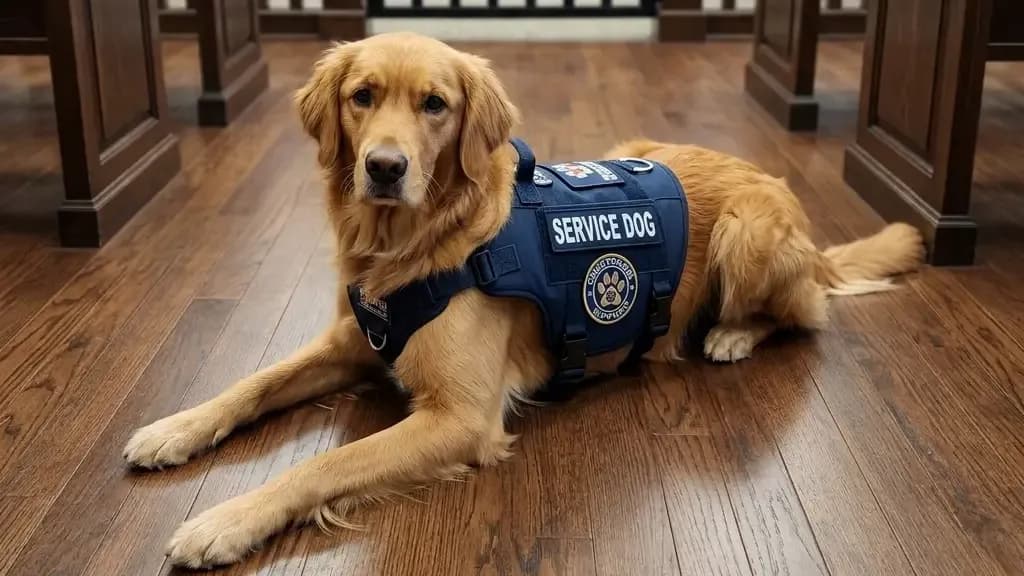
Courts and legal teams are increasingly using trained facility dogs to support vulnerable participants during testimony and other interactions with the justice system, recognizing the importance of emotional support. For litigators and support staff, that accommodation is not just a human-interest detail. It can change scheduling, deposition setup, and how the record is built for motion practice and trial.
Courthouse facility dogs are showing up more often in busy dockets because courts are trying to provide comfort to children and other vulnerable witnesses without delaying proceedings, and more jurisdictions now have established facility dog programs that can be scheduled like any other courtroom accommodation.
What A Courthouse Facility Dog Is and What It Is Not
A courthouse facility dog is generally described as a professionally trained assistance dog that provides quiet companionship to vulnerable individuals in legal settings without disrupting proceedings. These dogs are selected and trained to remain calm in high-stress environments and to work with a primary handler in justice-system settings, providing essential assistance during legal proceedings.
This term is frequently misunderstood compared to other dog categories. Making this distinction is important because it influences policies, room expectations, and how the dog is recorded and discussed.
Courthouse facility dog: A professionally trained dog assigned to justice-system work, typically handled by a trained professional in the legal system or an approved program handler.
Service animal: Under federal ADA guidance, a dog individually trained to do work or perform tasks for a person with a disability.
Therapy dog: A term often used for comfort animals that visit facilities, but that category is not the same as a service animal under the ADA definition.
Common settings for courthouse facility dogs include prosecutor's offices, child advocacy centers, and family courts, as well as courtroom support during testimony. These dogs help some witnesses, which is one reason courts are more willing to approve these programs without slowing the docket.
Fairness Concerns and Potential Objections with Court Facility Dogs
When the use of a facility dog is disputed, the debate often centers on juror perception and fairness. The American Bar Association has noted that critics argue a dog’s presence during testimony may prejudice jurors against the opposing party by creating sympathy for the witness or by suggesting the witness needs protection.
From a workflow standpoint, the main issue is not who is “right.” It is whether the court’s reasoning, limits, and safeguards are captured in a usable record. If the court addresses the request through a hearing, a motion in limine, or an on-the-record discussion before testimony, teams usually need a transcript fast enough to support short briefing schedules and trial prep.
A good operational approach is to treat the accommodation decision like any other evidentiary or courtroom-management ruling that might matter later. That means tracking when the request was raised, what the court authorized, and how the court planned to mitigate potential prejudice (for example, by issuing a limiting instruction or rules governing juror interaction).
Coordinating with court reporting is crucial here. If counsel anticipates a briefing or a fast-tracked trial schedule, it is beneficial to discuss the delivery timeline early so page-line citations can be prepared when needed for motions and objections.
Deposition Planning When a Facility Dog Is Part of Witness Support
When a facility dog attends a deposition, the process typically goes smoothly, but only if logistics are arranged early to ensure the dog's emotional support is effective. These dogs are generally used in sensitive or stressful situations, which often involve scheduling conflicts such as limited witness availability, multiple counsel calendars, and strict notice periods.
Start by confirming the basics early in the scheduling cycle for professionals working in legal proceedings:
1. Who is the authorized handler, and what is their availability?
2. Will the dog be present only during testimony, or also during prep sessions on the same day to provide emotional support throughout the legal proceedings?
3. Will the dog be in the room for the full deposition, or for specific segments?
Those details affect room reservations, start and stop times, and break planning. They also affect how the record will read if the witness needs pauses or if counsel requests off-the-record breaks more frequently than usual.
Court Facility Dogs and Remote Deposition Considerations
Remote depositions add another layer. If the witness is remote and a dog is present, teams should confirm who else is physically in the room with the witness, whether any person will assist with exhibits, and whether the dog will be visible on camera. A visible dog can become a distraction if camera framing changes during testimony, so it is worth agreeing on a stable setup in advance.
A tech test is generally a valuable use of time. It helps prevent audio dropouts, camera issues, and screen-share failures, which can lead to unclear testimony and unreliable video recordings. Remote deposition support teams typically coordinate these tests, oversee platform controls, and ensure the session stays on schedule.
Court Reporting Strategies with Court Facility Dogs
In sensitive matters, the court reporter is not just capturing words. The court reporter is producing a litigation asset that needs to be usable in real time for objections, later for designations, and later still for trial presentation.
For cases that include a facility dog accommodation, testimony can include quieter speech, longer pauses, or more frequent breaks. That makes speaker identification and on- and off-the-record transitions especially important. A consistent protocol helps:
Confirm the exhibit naming approach before the deposition begins so the transcript index matches later exhibit sets.
Keep a running issue list tied to page-line references for later motion practice.
Decide early whether the team needs real-time transcription, daily copy, or expedited delivery
A professional transcriptionist aids trial teams and counsel by quickly flagging potential issues arising from the use of a courthouse facility dog.
Guidelines For Maintaining the Usability of Video Recordings When a Courthouse Facility Dog Is Present
Legal teams should decide early whether a courthouse facility dog will appear on camera during testimony. A wider frame that captures the witness area, including the facility dog, may later matter if counsel disputes how the setup could influence perception. A tighter frame that stays on the witness may keep attention on testimony, but it still needs enough context to show who is in the room and who is speaking.
Audio is often the limiting factor in these sessions. A witness supported by a courthouse facility dog may speak more softly or pause more often, and remote platforms can introduce compression and lag. Plan redundant audio capture, confirm microphone placement, and run a short sound check before the oath so the video record stays usable alongside the transcript.
If trial playback is likely, plan synchronization and clip outputs from the start. Align exhibit display methods, timestamps, and page-line references so the legal videographer, court reporter, and trial presentation team can produce deposition clips that match designations without rework.
Trial Exhibit Preparation for Vulnerable Witnesses Needing a Courthouse Dog
When a witness requires a court dog during testimony, exhibit preparation has a primary goal: ensuring the testimony remains steady and the record remains usable. A court dog may be permitted when the court anticipates the witness will struggle under stress. This often leads to tighter courtroom control and less patience for handling exhibits at the stand.
Start by deciding how exhibits will be presented while the court dog is present. Paper exhibits increase handoffs, pauses, and movement near the witness, whereas digital displays tend to keep the process calmer, as exhibits can be shown on a screen without passing documents. Next, plan for restricted materials common in cases involving an assistance dog, such as private medical records or sensitive photos. Prepare display-ready versions that meet court-imposed limitations, and keep a separate, sealed, or restricted set to avoid fixing issues mid-testimony.
Finally, lock the exhibits before testimony begins so the courthouse dog setup stays steady. Use one master exhibit list and confirm which copy will be shown while the court dog is present, especially for private or graphic materials. If there are redacted and unredacted copies, label them so the difference is obvious on the record and in the transcript index.
Trial Presentation Planning When a Court Assistance Dog Is Present in Court
When a court assistance dog is present during testimony, trial presentation planning should reduce movement and surprises near the witness. The dog is usually allowed because the court expects testimony to be difficult for the witness. That makes a controlled setup even more important.
Plan the courtroom layout so cables, monitors, and operator positions do not require staff to move around the witness stand during exhibits or clip playback. Jurors should see the screen without equipment blocking the witness area or drawing attention to the dog.
Audio and video checks should happen in the courtroom, not in an office. Clip playback volume, microphone pickup, and screen visibility can change based on the room. If the case includes deposition video, confirm the playback format and verify that timestamps, captions, and page-line references match the exhibit list.
A trial technician or trial presentation consultant can test the system in the venue, load exhibits into the presentation platform, and run a playback rehearsal. That reduces delays during testimony and helps preserve an accurate record of what the jury saw and heard.
If Your Case Involves a Court Facility Dog, Consult a Qualified Client Services Professional for Assistance
When a courthouse facility dog is part of a case, attorneys need an experienced client services provider. This person should effectively handle deposition scheduling, assist with remote setups, coordinate transcript delivery, coordinate video arrangements, arrange interpreters, and smoothly manage trial presentation logistics.
NAEGELI Deposition & Trial supports litigation teams nationwide by offering court reporting, legal videography, transcription, remote deposition assistance, trial presentation services, copying and scanning, and interpreter services. Contact us today to request a rate sheet or to schedule an experienced court reporter at (800) 528-3335 or email schedule@naegeliusa.com.
You can also click “SCHEDULE NOW” or live chat for litigation support services.
Frequently Asked Questions About Courtroom Facility Dogs
Are Courthouse Facility Dogs Permitted in All Jurisdictions?
Policies vary by jurisdiction and by courthouse. Courts may address the issue through local procedures, case-by-case decisions, or program rules. Teams should confirm the local approach early so that scheduling and the record plan align with the court's permitted approach.
Why Do Some Lawyers Raise Prejudice Concerns About Dogs in Courtrooms?
Some critics argue a dog’s presence during testimony may influence jurors by increasing sympathy for the witness or by implying the opposing party caused the witness’s distress.
Should The Facility Dog Be Visible on a Deposition Video?
That depends on the purpose of the video record and any ground rules set by the court or by counsel. Planning ahead helps avoid mid-testimony framing changes that distract from the witness.
Do Facility Dogs Have Handlers in the Courtroom?
Yes. A courthouse facility dog works with a trained handler in court proceedings. The handler is usually a justice-system professional (often a victim advocate, prosecutor, detective, or forensic interviewer) trained by the assistance-dog program. The courthouse facility dog generally stays under the handler’s control in the courtroom and returns home with that primary handler when off duty.