What a Remote Deposition Requires
How NAEGELI Deposition & Trial coordinates court reporters and technical support for virtual depositions
Executive Summary
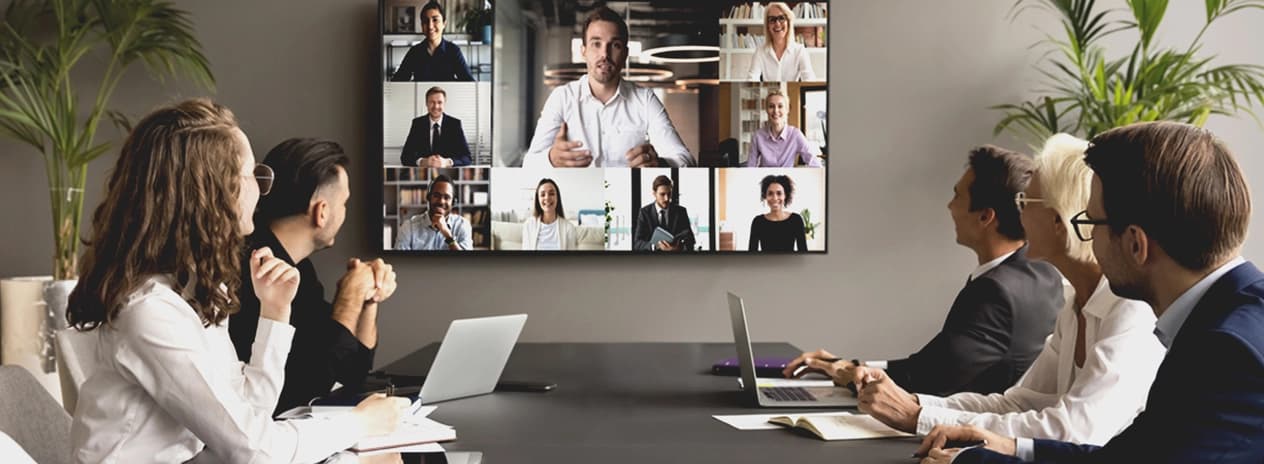
Robert Carmichael of Archer Dunne LLP needed a court reporter for a remote deposition that was quickly becoming demanding before it began. The key witness was known to be evasive, opposing counsel was hesitant to join a remote session, and participants spanned across three time zones. NAEGELI matched the session to an experienced remote court reporter, set up a fully managed virtual environment with a dedicated technical team, and had every participant confirmed and connected before the first question was asked. Nine hours later, the record was built and the connection never dropped. This case study examines how NAEGELI staffs, prepares, and supports remote depositions, and what that support looks like when a session pushes every limit.
The names of individuals, law firms, companies, and case-specific details in this article have been changed to protect the confidentiality of our clients and all parties involved. The events, services, and outcomes described are real.
Robert Carmichael of Archer Dunne LLP had an upcoming remote deposition that was shaping up to be one of the more demanding sessions his firm had ever dealt with. The witness had a history of being difficult, opposing counsel was skeptical of the remote format, and the participants were split between three time zones.
When he called NAEGELI Deposition & Trial to schedule a remote court reporter, all the logistical challenges he had been bracing for were put to rest in an instant. Not only would NAEGELI provide a court reporter experienced in controlling the room during remote settings, but they would also manage the Zoom session through a dedicated technical team charged with monitoring the connection and audio/visual quality throughout the proceeding. Sandra Cruz, the NAEGELI Scheduling Executive assigned to the case, was happy to put Mr. Carmichael’s mind at ease, but knew the work was just beginning.
Remote Deposition Scheduling: How NAEGELI Assigns the Right Court Reporter to Every Session
Scheduling a remote deposition at NAEGELI is more than finding someone who is available. It begins with understanding what skills the proceeding will require (controlling multiple deponents, coordinating with an interpreter, knowledge of technical terminology), and assigning the reporter with the most relevant experience.
Cruz walked through the same set of questions she does with every client: Where is the deponent located, what time zone does that put them in, what is the deposition’s subject matter, and how many participants are expected? Those answers shape which reporter is assigned, how the remote platform is set up, and what additional support is put in place.
For this case, Cruz turned to veteran Court Reporter Claire Merritt.
“For a remote proceeding, the experience we look for needs to have happened in a remote setting. Being outside the same physical space as the deponents and counsel is a whole other ball game, and not something you can pick up on the fly. There is being a good court reporter, then there is being a good remote court reporter, and this case required the latter.”
But a court reporter is only one part of the team. Once the right reporter is confirmed, NAEGELI’s scheduling team turns its attention to everything else the session requires. If the witness is appearing at a location NAEGELI arranges, Wi-Fi availability is confirmed before the booking is finalized. If there is an in-person court reporter in the mix, they arrive with a personal hotspot as a contingency.
For witnesses joining from their own offices, the ordering attorney is coached during scheduling on what to ask about connection quality and device setup before the session begins. The media team is notified, a NAEGELI-provided Zoom link is generated, and the technical environment is configured around the specific needs of the proceeding. While a stable connection is never guaranteed, these protocols mitigate the dropoff risk as much as possible.
When participants are joining from different parts of the country, NAEGELI confirms a start time that accounts for every location’s time zone and communicates that clearly to the ordering attorney before the session is finalized.
Setting the Stage: The 30 Minutes That Make the Difference
For NAEGELI, the most critical moments of a deposition happen well before the opening question.
NAEGELI court reporters and remote technicians are required to join the virtual room 30 minutes before the scheduled start time. Reporter Claire Merritt was in position to greet participants as they arrived, confirming their names, titles, firm affiliations, mailing addresses, and cross-checking those details against what she had already pulled from state bar records during her job preparation.
Court reporters at NAEGELI study the notice of deposition in advance, researching the attorneys on both sides, building a preliminary spelling list from proper nouns in the notice, and reviewing any background materials available. The goal is to arrive already knowing the names, the organizations, and the topics a proceeding will cover.
The NAEGELI remote technicians spent the 30 minutes before the deposition checking audio quality, addressing participants whose microphones needed attention, and asking anyone whose face was not completely in frame to adjust their camera.
Once the deposition is underway, the technicians stay on the line to handle everything the reporter cannot. Audio feedback, microphone settings, background noise filtering, screen sharing guidance for participants who need it. Their sole job is to ensure the remote space remains clear and connected.
For attorneys with a large number of exhibits they would rather not manage themselves, NAEGELI offers their specialized Exhibit Technicians as an additive service. Rather than interrupting their line of questioning to locate and display exhibits, the attorney calls them out and the technician pulls them up, highlights the relevant sections, and stores them for the record. This service is offered to all clients in advance of the deposition, so attorneys do not have to waste time organizing exhibits unnecessarily.
“If you are not comfortable working in a remote environment, it becomes a significant distraction that can break your flow. We have learned from our clients how important maintaining rhythm is, and how you present exhibits is part of that. It is something we are happy to handle the logistics of on our end.”
On the Record: What a Remote Court Reporter Is Managing
The remote technicians might troubleshoot any technical issues, but it is still the reporter’s responsibility to track audio quality across every participant simultaneously, listen for glitches, and address any moments where a word or phrase drops out of the record. When that happens, Merritt stops the proceeding and asks for the testimony to be restated. Not paraphrased, but repeated as closely as possible to what was said.
Cross-talk is a persistent challenge all reporters face during depositions, but solving for it in a remote environment becomes even more complex. When two voices speak at the same moment, the audio feed can distort or fragment, compromising the record. During cross-talk, Merritt must insert herself into the conversation firmly yet professionally, asking for one speaker at a time, and then requesting the affected portion to be restated cleanly. The NAEGELI remote technician supports this by monitoring the audio feed in real time and adjusting individual participant levels when needed.
The court reporter and the exhibit technician each play a distinct role when it comes to exhibits. The exhibit technician manages the technical side, sharing exhibits on screen at the attorney’s direction and storing the files during the session. Every time an exhibit is introduced, the court reporter notes it in the transcript record, so it is clear which exhibit was referenced and what was said about it. By the end of the session, Merritt had built a complete exhibit index that became part of the certified transcript.
The Outcome: A 9-Hour Deposition That Never Missed a Beat
Carmichael’s deposition brought all the promised inconveniences, plus a few extra. A witness who was thought to be unavailable ended up joining last-minute, a debate over the admissibility of exhibits arose, and follow-up questions on both sides were extensive. Altogether, the deposition ended up running about three hours over the estimated six hours.
When Carmichael followed up the next morning, it was not just to pass along his appreciation. He needed the transcript expedited. A filing deadline was approaching and the record from the previous day’s session was central to it. The NAEGELI team escalated the order as urgent and delivered the certified transcript in under 48 hours, including a full word index and clearly marked exhibit references. The transcript also came with a complimentary transcript summary, a condensed overview of the day’s testimony that gave Carmichael’s team a working document they could act on immediately, without having to read nine hours of record to find what they needed.
Merritt had kept the proceeding on track and the record ironclad. While there were several delays and disruptions, the remote connection was never one of them. Cruz had brought together the right team for the job, and the protocols NAEGELI had in place made the hard parts look easy.
Carmichael rebooked Merritt two days later, for another remote deposition.
Once the dust had settled, Merritt had a chance to reflect on the deposition and the difficulties it presented. While she acknowledged its burdens, she was grateful for her training and the routine she practices to ready herself for the most stressful days.
“I have a pre-deposition routine that never changes. I review my equipment twice, give myself 10 minutes of silence to clear my head, and read through my spelling list one final time. When the session begins, I am ready to perform no matter what the room throws at me.”
Planning a Remote Deposition? Here Is What to Expect from NAEGELI
Whether your deposition involves one participant joining remotely or every attorney on the case dialing in from a different city, the experience of working with NAEGELI stays consistent: A session staffed by experienced professionals who are prepared for every eventuality.
For over 45 years, NAEGELI Deposition & Trial has supported legal teams through every phase of litigation. We offer court reporting, transcription, professional videography, remote and hybrid deposition services, legal interpreting, document translation, and trial support, backed by a scheduling team that picks up the phone when you need them.
To speak to a Client Executive, call (800) 528-3335, email schedule@naegeliusa.com or chat with a live expert through our website.
Frequently Asked Questions: Remote and Hybrid Depositions
What is the difference between a remote deposition and a hybrid deposition?
A remote deposition is one where all participants (the court reporter, attorneys, and witness) join from separate locations through a virtual platform. A hybrid deposition combines in-person and remote attendance, where some participants are physically present at a location while others join virtually. NAEGELI supports both formats and can set up either configuration based on the needs of the case and the preferences of the ordering attorney.
How does NAEGELI assign court reporters to remote depositions?
Every remote deposition assignment starts with understanding what the session requires. The NAEGELI scheduling team asks about the deponent's location and time zone, the subject matter of the case, the number of participants, and any known complexities, such as multiple deponents, an interpreter, or a proceeding that is expected to be particularly lengthy. The reporter assigned is the one whose experience best matches what the session will require, not simply someone who is available.
What does the NAEGELI team do in the 30 minutes before a deposition begins?
Both the court reporter and the remote technician join the virtual room 30 minutes before the scheduled start time, and both are actively working from the moment they log in. The court reporter greets participants as they arrive, confirms their names, titles, firm affiliations, and mailing addresses, and cross-checks those details against state bar records pulled during job preparation. The remote technician handles the technical environment, testing audio quality, addressing microphone issues, filtering background noise, and walking participants through screen sharing if needed. By the time the deposition goes on the record, every participant has been confirmed and every technical variable is controlled.
What is an exhibit technician and when should I add one?
An exhibit technician is a NAEGELI specialist who manages the display and organization of exhibits on behalf of the attorney during a remote deposition. Rather than pausing their line of questioning to locate and share exhibits on screen, the attorney calls them out and the exhibit technician pulls them up, highlights relevant sections, and stores them for the record. This service is available as an additive option and can be requested before the deposition or added on the day of the session. Attorneys who prefer to manage their own exhibits are welcome to do so, and the NAEGELI technicians are available to walk them through screen sharing in advance if needed.
What can I do before the session to ensure a smooth remote deposition?
The most important thing an ordering attorney can do is confirm connectivity for any witness joining remotely. The NAEGELI scheduling team will coach attorneys on what to ask their witnesses about Wi-Fi strength and device setup before the session. If a witness is appearing at a location NAEGELI arranges, adequate Wi-Fi is confirmed as part of the booking process. For attorneys joining from their own location, NAEGELI recommends a wired connection where possible and provides guidance on what to do if connectivity is uncertain.
To speak to a Client Executive, call (800) 528-3335, email schedule@naegeliusa.com or chat with a live expert through our website.